
Episode 8: Moving and Grooving with Repetition and Looping
Posted on December 12, 2025 in Podcasts
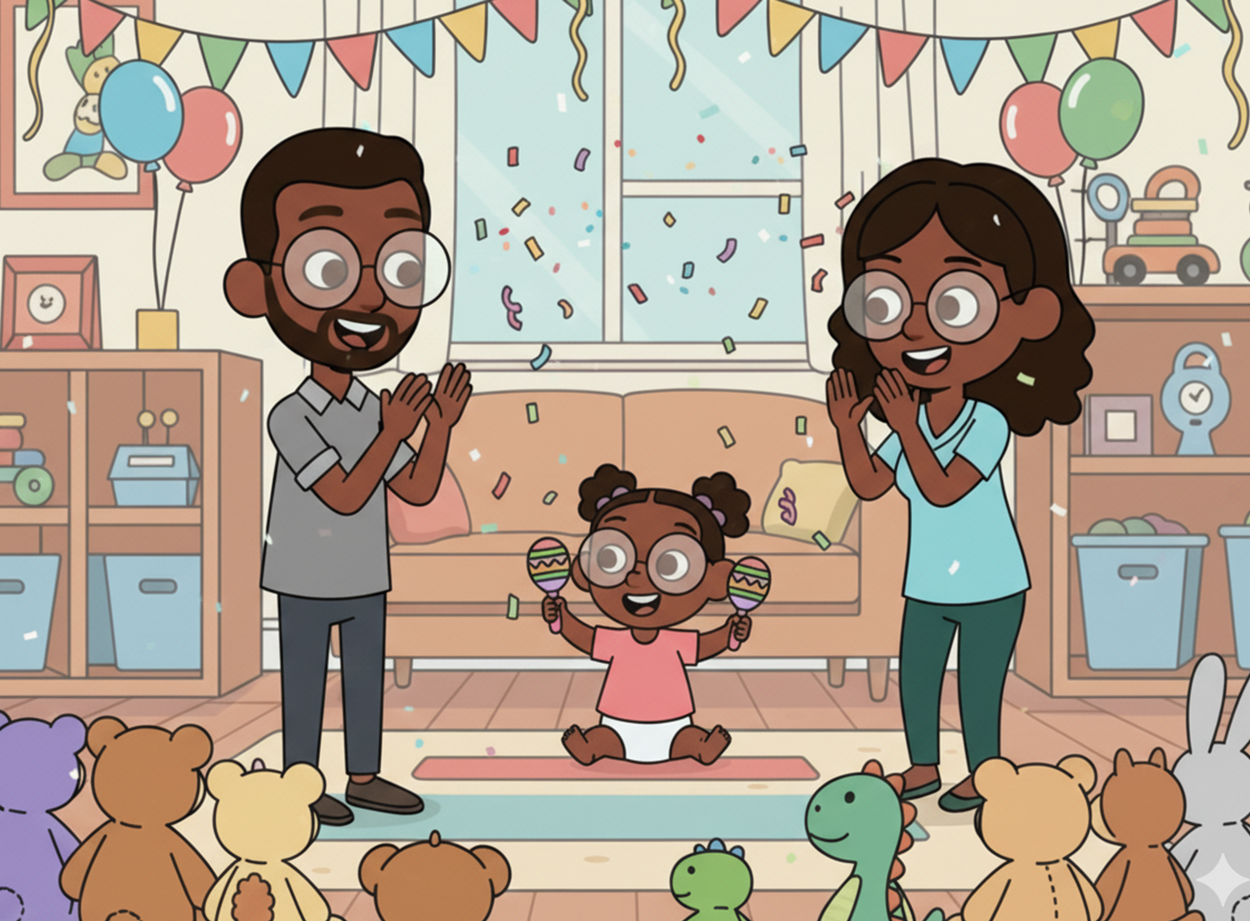
Understand why your child’s love of “again!” is actually building their brain! Join the Diaz family’s spontaneous celebration as the STEMIE Family Hotline helps them recognize how party games naturally teach pattern recognition and logical thinking. Pediatric occupational therapist and early intervention expert, Dr. Philippa Campbell shares research on repetition and looping in early development, plus practical strategies for supporting children with developmental delays through predictable, engaging activities.
About the guest
Philippa Campbell has conducted research in areas of inclusion, integrated therapy, and family-centered practices including caregiver teaching, professional development models, and use of adaptation and Assistive Technology interventions to promote children’s participation in home, child care, school, and community settings. A focus has been work with children with multiple challenges and their families. Many federal, state, and foundation grants have supported this work. Formerly the founder and director of Ohio’s Family Child Learning Center and the Teaching and Learning Collaborative (TLC), Philadelphia’s early intervention professional development program, Dr. Campbell is currently designated as a Collaborating Researcher, Thomas Jefferson University, Center for Measurement & Outcomes Research and independently contracts with universities, early intervention state entities, and other organizations doing work with infants, toddlers, and preschool-aged children. Dr. Campbell has published numerous articles, chapters, and other materials and presented work internationally and nationally. She has taught in university programs in early childhood education as well as in occupational therapy.
Key Takeaways
- Infants and toddlers can start developing computational thinking through simple, repeated games and routines, like party dances, songs, and peek-a-boo.
- Repetition and looping (i.e., doing the same action again and again) help children notice patterns, predict what comes next, and build early problem-solving skills.
- Using predictable phrases like “again!” or “one more time” and repeating movements or actions in the same order helps children connect words, actions, and outcomes.
- Following your child’s interests and giving them a “just-right” challenge keeps repetition fun instead of frustrating.

Related Resources
For adaptation tips and ideas, visit our Guide to Adaptations
Executive Producer: Wendy Sapp, Ph.D.
Producer: Jordan Brown
Consultants: Chih-Ing Lim, Ph.D., Hsiu-Wen Yang, Ph.D., Jessica Amsbary, Ph.D.
Voice over Artists: Shanna McRae (narrator); Sheli Baez (Nicole); David Davino (Eddie)
Produced in Partnership with Bridge Multimedia and STEMIE